
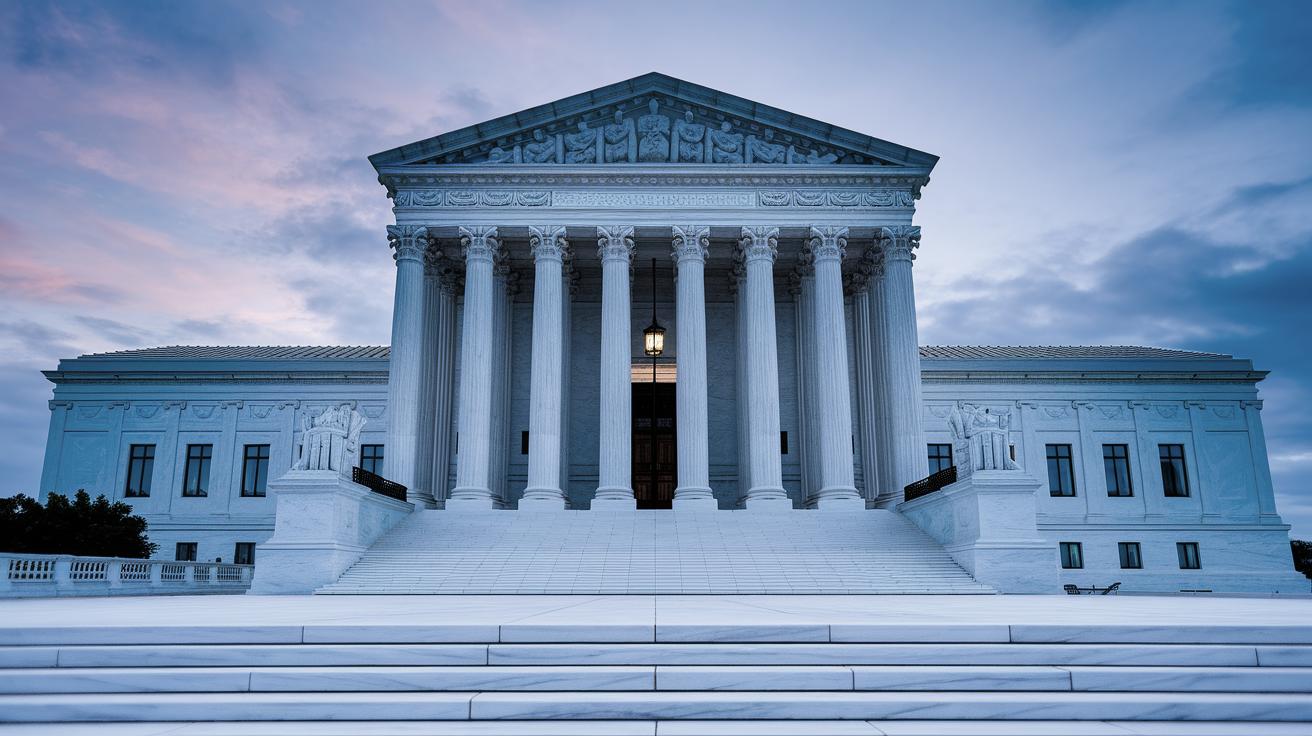
Thurgood Marshall: The First Black Supreme Court Justice
Thurgood Marshall stands as a monumental figure in the annals of American history, celebrated for his groundbreaking role as the first Black Supreme Court Justice. His legacy extends far beyond this remarkable achievement, rooted in a lifelong commitment to advancing racial equality and justice. Marshall’s journey from his modest beginnings to becoming a beacon of hope and change is a testament to his unwavering dedication and prowess in the legal arena. This blog post delves into the chapters of Marshall’s life, exploring his early influences, his formidable legal career, and his lasting impact on the nation’s highest court. Additionally, we acknowledge other heroes championing racial justice, emphasizing the ongoing relevance of this struggle and inviting readers to participate in this vital cause.
Early Life
Born on July 2, 1908, in Baltimore, Maryland, Thurgood Marshall was the great-grandson of slaves, whose legacy of struggle and resilience left a profound mark on his early years. His parents, William Marshall and Norma Arica, instilled in him the values of education and perseverance. His father, a railroad porter and steward at an all-white country club, exposed Marshall to the law by debating legal issues with him, thereby cultivating his early interest in justice. Encouraged by this environment, Marshall learned the importance of knowing one’s rights and advocating for equality.
Marshall attended Frederick Douglass High School in Baltimore, where his exceptional intellect and debating skills began to sharpen. He later pursued higher education at Lincoln University, an institution predominantly serving African Americans. There, he joined the Alpha Phi Alpha fraternity, demonstrating leadership and a commitment to advocacy. After graduating, he set his sights on law school, aspiring to dismantle the systemic barriers that he and countless others faced. Rejected by the University of Maryland’s law school due to racial discrimination, Marshall instead attended Howard University School of Law, where he thrived under the mentorship of Charles Hamilton Houston, who instilled in him a sense of purpose and strategic vision to fight segregation.
The Legal Eagle
Thurgood Marshall’s legal career was marked by a series of significant victories and a profound dedication to civil rights advocacy. After graduating first in his class from Howard University School of Law in 1933, he began working for the National Association for the Advancement of Colored People (NAACP), eventually becoming its chief counsel. It was in this capacity that Marshall cemented his reputation as a formidable force in combating racial injustice. He strategically used the legal system to challenge segregation and discrimination, perfecting the art of using litigation as a tool for societal change.
His most famous legal battle came in 1954 with the landmark case Brown v. Board of Education, where he argued before the Supreme Court that state-imposed segregation in public schools violated the 14th Amendment. Marshall’s impassioned and meticulously prepared arguments helped persuade the court to unanimously declare that “separate educational facilities are inherently unequal,” effectively dismantling the legal basis for racial segregation and driving forward the civil rights movement. This victory was pivotal, propelling him into the national spotlight and solidifying his role as a champion of equal rights.
A Supreme Legacy
In 1967, President Lyndon B. Johnson nominated Thurgood Marshall to the United States Supreme Court, marking a historic milestone as he became the first African American to serve on the nation’s highest court. During his tenure, Marshall continued to be a vocal advocate for individual rights and social justice. His jurisprudence was characterized by a deep empathy for the underprivileged and unwavering opposition to discrimination. Marshall often found himself in the minority opinion, yet his dissents were powerful articulations of justice that continue to resonate within the legal community and beyond.
Justice Marshall’s legacy is not only defined by his contributions on the bench but also by his broader influence on American society and the legal profession. He inspired generations of lawyers, judges, and civil rights activists to pursue justice and equality with the same tenacity and courage he exhibited throughout his career. His legal writings and opinions remain a vital source of guidance for those who continue to champion human rights and the rule of law, securing his place as a transformative figure of the twentieth century.
Meet Other Heroes Who Advanced Racial Justice
Thurgood Marshall was not alone in his fight for racial justice; numerous other trailblazers contributed significantly to advancing civil rights in America. Figures like Charles Hamilton Houston, Marshall’s mentor, and the architect of many legal strategies used to challenge segregation, played critical roles in laying the groundwork for the successes that followed. His strategic vision for using litigation as a tool for social change served as the blueprint that Marshall and others utilized to great effect.
Other prominent figures include Rosa Parks, whose defiance in refusing to give up her seat on a bus ignited the Montgomery Bus Boycott, and Martin Luther King Jr., whose leadership and eloquence became synonymous with the nonviolent civil rights movement. Furthermore, pioneering attorneys like Constance Baker Motley, the first African American woman appointed as a federal judge, continued to break down barriers in the judicial system, ensuring a legacy of progress that continues to inspire new generations of activists.
Join the Fight
The struggle for racial justice and equality remains a pressing issue today, and the legacy of Thurgood Marshall serves as both a beacon and a challenge for future generations. It is essential for individuals to engage in the ongoing fight for social justice by educating themselves, advocating for policy changes, and supporting organizations dedicated to civil rights. By doing so, we honor the memory of Marshall and all those who have fought tirelessly for equality, ensuring that their sacrifices continue to drive meaningful change.
Readers are encouraged to participate in local and national movements working towards racial equality and to use their voices to highlight and combat injustices in their communities. By fostering inclusivity and understanding, and by challenging discriminatory practices wherever they arise, each person can contribute to a society that values and upholds the dignity and rights of all its members.
Future Prospects
| Subheading | Content Summary |
|---|---|
| Early Life | Explores Thurgood Marshall’s formative years, his family’s influence, education, and the early sparks of his interest in law and justice. |
| The Legal Eagle | Highlights Marshall’s career as a lawyer with the NAACP, his pivotal role in Brown v. Board of Education, and his impact on civil rights through the legal system. |
| A Supreme Legacy | Discusses Marshall’s historic appointment to the Supreme Court, his jurisprudence, influence, and inspiration he provided for future generations of legal professionals and activists. |
| Meet Other Heroes Who Advanced Racial Justice | Recognizes other influential figures in the fight for racial equality, and outlines their contributions and legacies alongside Marshall’s efforts. |
| Join the Fight | Encourages active participation in contemporary racial justice efforts by supporting relevant movements, understanding historical contexts, and advocating for equality. |