
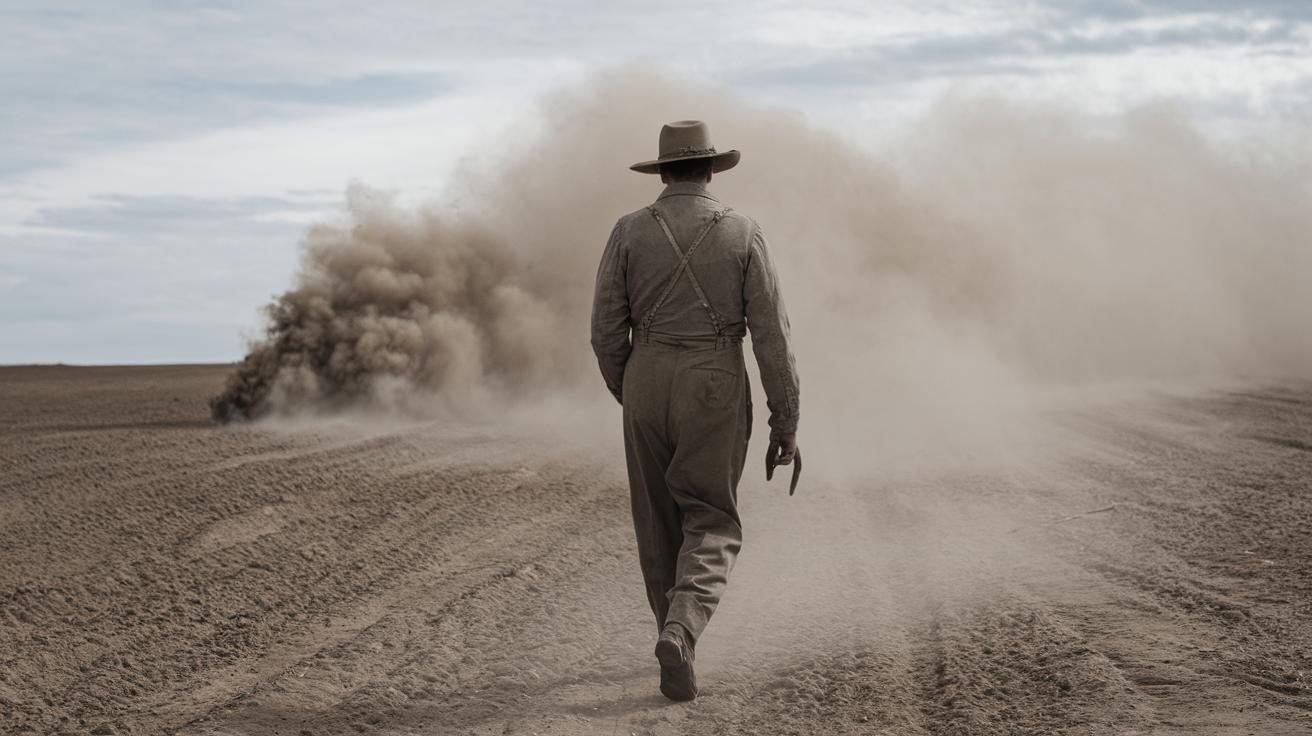
The Black Sunday Dust Bowl Catastrophe
The Dust Bowl was an ecological and human disaster that struck the American Midwest in the 1930s. Among its many catastrophic days, Black Sunday stands out as particularly severe, marking a culmination of the harsh conditions of the era. This post explores the broader context of the Dust Bowl during the “Dirty Thirties,” the infamous “Black Blizzards,” and the significant events of Black Sunday which led to the connotation of this period as the Dust Bowl. By understanding these key episodes, we unveil the pivotal lessons learned from this environmental calamity and contemplate what it might mean for our future.
The Dirty Thirties
The 1930s, often referred to as the “Dirty Thirties,” was a decade marked by severe economic hardship and significant environmental challenges. This period coincided with the Great Depression, further exacerbating the struggles of many Americans. For the farming communities of the Great Plains, the challenges were twofold: financial ruin coupled with agricultural devastation due to extreme drought conditions.
As crops withered and soil eroded, the already vulnerable farming industry faced unprecedented setbacks. Poor agricultural practices, such as excessive plowing and failure to implement crop rotation, left the land bare and vulnerable to the harsh climate. Windstorms turned the dry, nutrient-stripped soil into airborne clouds of dust, creating what came to be known as the Dust Bowl.
“Black Blizzards”
The dust storms that swept across the Great Plains were often referred to as “Black Blizzards.” These storms were characterized by their intensity and scale, with some extending as far as the Atlantic Ocean. An eerie darkness descended upon towns as these dust clouds enveloped everything in their path, turning day into night, and creating an apocalyptic scene.
People caught outside during these storms described a suffocating dust that filled their lungs and coated everything around them. Homes were not spared as dust seeped through cracks, layering everything in a fine, gritty residue. The storms brought with them a cascade of health issues, economic stagnation, and increased migration, as people fled the inhospitable conditions in search of better opportunities.
From Black Sunday to the Dust Bowl
Black Sunday, which occurred on April 14, 1935, is remembered as one of the most severe dust storms of the Dust Bowl era. On this day, a massive storm swept its way across the plains, blinding all in its path and destroying crops and homes. This catastrophic event brought national attention to the plight of those living in the Great Plains, prompting responses from both state and federal governments.
The name “Dust Bowl” began to symbolize the collective experience of the 1930s’ weather patterns combined with financial difficulty and agricultural disarray. Black Sunday galvanized efforts to address the environmental and economic consequences facing the region. It prompted the development of more sustainable agricultural practices and government intervention to assist those affected, highlighting the need for cooperation between people and their environment.
The Worst Day of the Dust Bowl
On Black Sunday, the sheer magnitude of the storm was a vivid reminder of nature’s overwhelming power. Winds topped 60 miles per hour, carrying an estimated 300,000 tons of dust across hundreds of miles. Witnesses likened it to a rolling wall of darkness that stretched across the horizon, obliterating visibility and stopping people in their tracks. Many sought refuge wherever they could, from their homes to storm shelters, often fearing the end of the world had come.
This event marked a turning point in how the public perceived environmental management and disaster preparedness. It underscored the importance of prudent agricultural practices and influenced future policies on land management to prevent similar occurrences. The day changed the lives of many forever, seeding new awareness and fostering a resolve to better confront natural calamities.
Future Prospects
| Event | Impact | Lessons Learned |
|---|---|---|
| The Dirty Thirties | Economic & environmental hardships during the 1930s. | Importance of sustainable agriculture practices. |
| “Black Blizzards” | Severe dust storms impacting health and economy. | Need for comprehensive disaster preparedness. |
| Black Sunday | Massive dust storm causing immense devastation. | Galvanized policy changes and environmental awareness. |