
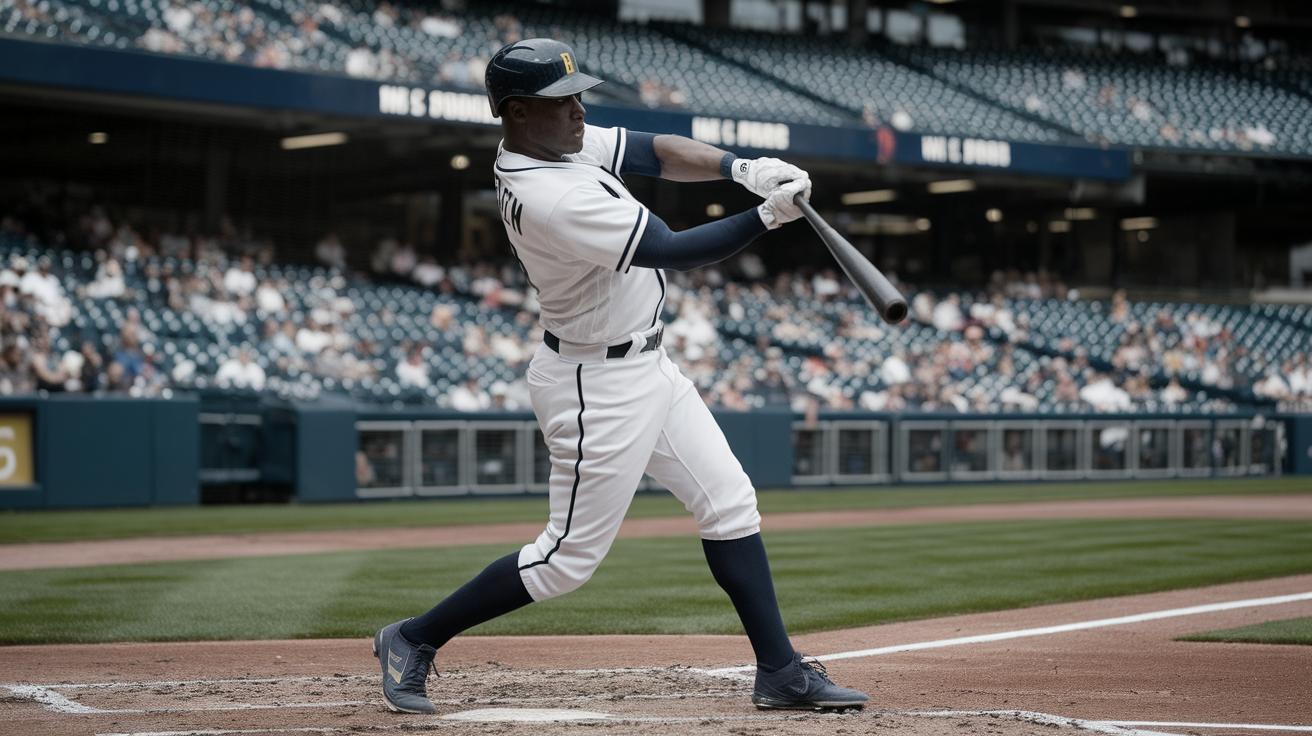
Jackie Robinson: Breaking Barriers in Baseball
Jackie Robinson stands as a towering figure not only in the world of sports but also in the history of civil rights. As the first Black player in Major League Baseball in the modern era, Robinson’s integration into this quintessentially American pastime wasn’t just a personal triumph but one that symbolized a broader struggle for equality and justice. This blog post delves into Robinson’s early life, his groundbreaking entry into Major League Baseball, and his profound influence both on and off the field. By examining his life, achievements, and legacy, we understand why Jackie Robinson remains an enduring emblem of courage and change.
Early Life
What was Jackie Robinson’s early life like?
Jackie Robinson was born on January 31, 1919, in Cairo, Georgia, into a family of sharecroppers. His impetus to succeed and defy the odds was shaped by the challenges he faced growing up in a racially segregated society. After his father left, Robinson’s mother moved the family to Pasadena, California, where she worked various odd jobs to support her children. Despite the economic hardships, Robinson’s athletic promise emerged early on.
Attending John Muir High School, Robinson excelled in multiple sports including football, basketball, and track. He continued to distinguish himself as an athlete at Pasadena Junior College and later at UCLA, where he became the first to letter in four sports: baseball, basketball, football, and track. However, his college career was cut short when he decided to support his family by joining a semi-professional football league, further sharpening his resolve and determination.
Breaking the Color Barrier
Why is Jackie Robinson so important?
Jackie Robinson is revered as a pivotal symbol in the fight against racial discrimination. In 1947, when Robinson was signed by the Brooklyn Dodgers, he shattered baseball’s longstanding color line, becoming the first African American to play in the Major Leagues in the modern era. This historic event was a significant victory for racial integration in sports and had wide-reaching implications for the struggle for civil rights in the United States.
Robinson’s journey to the Major Leagues was fraught with racial tension. He faced death threats, abuse from fans and fellow players, and relentless scrutiny from the media. Despite this, Robinson’s demeanor and integrity on and off the field became a catalyst for change, showing the world that excellence and character are not determined by skin color. His bravery laid the groundwork for future generations of minority athletes.
What were Jackie Robinson’s achievements?
Jackie Robinson’s inaugural season with the Dodgers was nothing short of extraordinary. In 1947, he was awarded the inaugural Rookie of the Year award, an accolade that recognized his tremendous skills and determination. His career continued to flourish as he went on to win the National League Most Valuable Player (MVP) Award in 1949, leading the league in batting average and stolen bases.
Throughout his ten-year career, Robinson achieved a batting average of .311, played in six World Series, and was selected for six consecutive All-Star Games from 1949 to 1954. Beyond the statistics, Robinson redefined what was possible for Black athletes, challenging the systemic racism inherent in professional sports and setting the stage for the integration of other leagues.
How did Jackie Robinson influence others?
Jackie Robinson’s legacy extends far beyond his achievements on the baseball diamond. He became a beacon of hope and a powerful inspiration for generations of athletes and civil rights activists. His courage opened doors for countless others, both in sports and in broader societal contexts, illustrating that perseverance and excellence could overcome adversity.
Robinson’s impact reached into the burgeoning civil rights movement, where his visibility and strength were seen as emblematic of the broader fight against racial injustice. He used his platform to speak out against segregation, discrimination, and inequality, championing the cause of justice for African Americans and other marginalized groups. Robinson’s life and career offered a glimpse into a more equitable future and set the tone for the ongoing struggle for equality.
Retirement and Death
After retiring from baseball in 1957, Jackie Robinson remained active in the push for civil rights. He worked as a businessman and continued to break new ground by becoming the first Black vice president of a major American corporation, Chock Full o’ Nuts. He also supported the establishment of a number of civil rights organizations and remained vocal about issues of race and equality.
Jackie Robinson passed away on October 24, 1972, at the age of 53, following a heart attack. Though his life was relatively short, his enduring impact on society and sports is immeasurable. His narrative is one of resilience, purpose, and unwavering dedication to improving the lives of others, engraining him as a lasting symbol of hope and change.
Jackie Robinson Day
To honor his contributions and legacy, Major League Baseball celebrates Jackie Robinson Day every April 15, the anniversary of his MLB debut. On this day, players from all teams wear Robinson’s iconic number 42, a powerful tribute to the man who permanently changed the landscape of American sports and culture.
Jackie Robinson Day serves as a reminder of his indomitable spirit and the barriers he broke down. It is a celebration of diversity, respect, and equality—values that Robinson epitomized and advanced throughout his life. The annual event underscores his enduring impact on baseball and society as a whole, highlighting the continued relevance of his contributions to equality and justice.
Summary of Main Points
| Topic | Details |
|---|---|
| Early Life | Born in 1919, excelled in athletics at UCLA, faced economic and racial challenges. |
| Breaking the Color Barrier | Became the first Black MLB player in the modern era in 1947, symbolizing a breakthrough in racial integration. |
| Achievements | Won Rookie of the Year in 1947, MVP in 1949, and played in six All-Star Games and six World Series. |
| Influence | Inspired future generations, supported civil rights, and used his platform for advocacy. |
| Retirement and Death | Worked for civil rights and died in 1972, leaving a lasting legacy. |
| Jackie Robinson Day | Annual celebration on April 15, honoring his contributions to baseball and social justice. |