
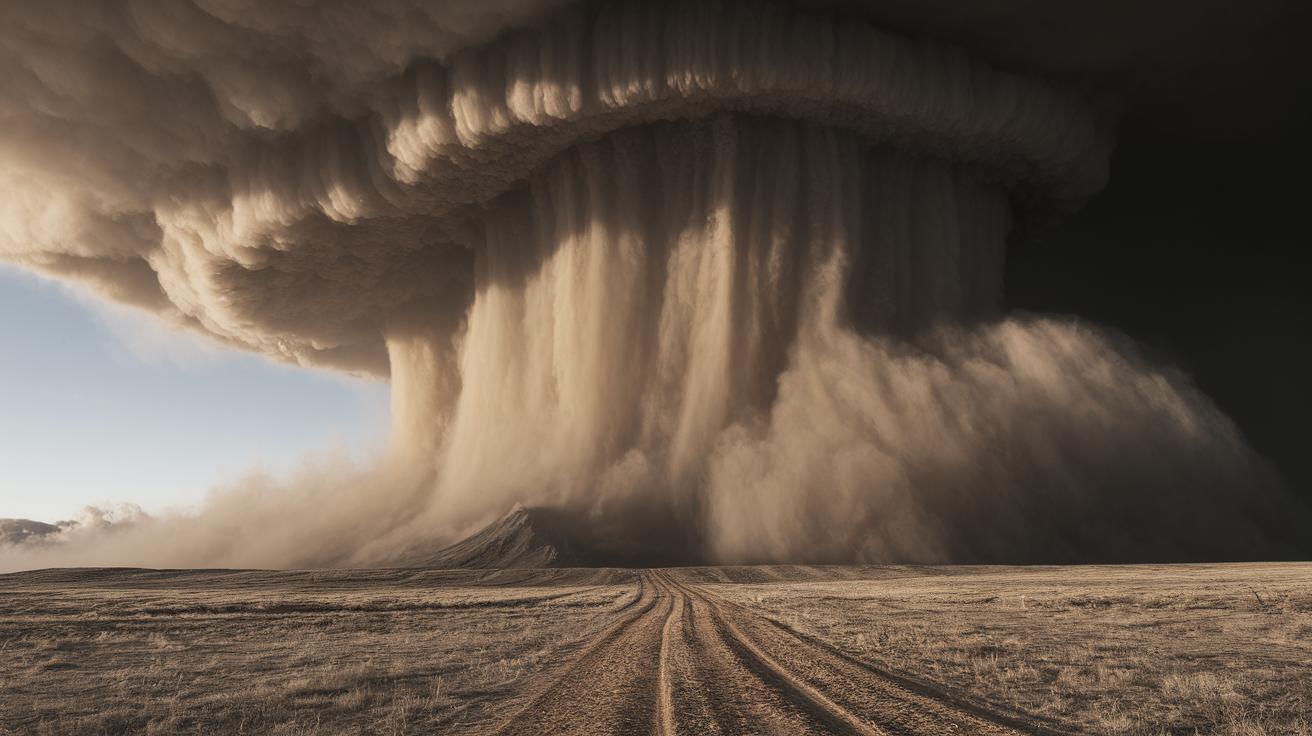
The Black Sunday Dust Storm
The 1930s were characterized by a series of devastating dust storms that swept across the American and Canadian prairies, known collectively as the Dust Bowl. Perhaps the most infamous event during this period was the so-called “Black Sunday” dust storm of April 14, 1935. This article will delve into the background of the Dust Bowl Era, elucidating the causes and impacts of these catastrophic “Black Blizzards.” We will explore the events leading up to Black Sunday, its direct implications, and reflect on its historical significance. Additionally, we will look at the commemorative efforts to remember Black Sunday and consider the lessons learned in the context of modern environmental challenges. By understanding the causes and consequences of these storms, we shed light on the need for sustainable farming practices and environmental stewardship.
The Dirty Thirties
The 1930s, often dubbed “The Dirty Thirties,” were marked by severe economic and environmental hardships across North America. This tumultuous decade was characterized by the Great Depression, a period of profound economic downturn, which coincided with an environmental calamity in the form of the Dust Bowl. The phenomenon was primarily centered in the Great Plains region, encompassing parts of Texas, Oklahoma, Kansas, Colorado, and New Mexico. As farmers worked to cultivate the land with inadequate techniques, their efforts inadvertently devastated the delicate prairie ecosystem, leaving the earth bare and vulnerable to erosion.
The plow-based farming practices, combined with an unusual period of drought, led to the loss of millions of tons of fertile topsoil. This environmental disaster was compounded by economic hardship, as families living in the affected areas struggled with crop failures and declining agricultural productivity. The country’s reliance on agriculture meant that the Dust Bowl further exacerbated the effects of the Great Depression, leading to widespread poverty and mass migration as farmers abandoned their ravaged lands in search of livelihoods elsewhere.
“Black Blizzards”
Famously depicted in John Steinbeck’s “The Grapes of Wrath,” the Dust Bowl gave rise to massive dust storms, known colloquially as “Black Blizzards.” These suffocating storms were so named for their ominous, darkened skies, which blocked out the sun and engulfed towns and farms. Formed when strong winds lifted loose topsoil from the drought-parched earth, these blizzards could reach speeds of up to 60 mph, carrying soil particles over vast distances and affecting areas well outside the Great Plains.
The impact of the Black Blizzards was far-reaching, causing respiratory ailments and severe damage to machinery and infrastructure. People wrestled with the seemingly apocalyptic conditions, fashioning makeshift protective gear in an attempt to shield themselves from the choking dust. The storms were not only a physical menace, but they also fostered an atmosphere of despair and hopelessness, as many watched their homes and livelihoods disintegrate. This period exposed the vulnerabilities of agricultural systems and became a call to action for scientists and policymakers to rethink soil conservation and agricultural practices.
From Black Sunday to the Dust Bowl
The most catastrophic of these dust storms, Black Sunday, struck on April 14, 1935. It arose unexpectedly, as families enjoyed a relatively clear day, shrouding the region with an unprecedented wall of dust that reached heights of up to 8,000 feet and reduced visibility to near zero within minutes. The event stretched across major portions of the Midwest, inciting panic as people scrambled for cover from the billowing dust cloud. It was a stark reminder of the ferocity and scale of the Dust Bowl disaster and highlighted the urgent need for intervention.
Black Sunday prompted significant government response and intervention under the New Deal, particularly through the establishment of the Soil Conservation Service in 1935. This agency played a vital role in promoting practices aimed at preserving soil integrity and preventing further environmental degradation. Schemes like crop rotation, reforestation, and the establishment of windbreaks were introduced, signaling a shift towards more sustainable land management practices. These measures, while not an immediate fix, laid the groundwork for the gradual recovery of the region’s agriculture and economy.
Anniversary of Black Sunday (Dust Bowl)
Each year, the anniversary of Black Sunday serves as an occasion to reflect on the lessons learned from the Dust Bowl Era. Commemorative events often include exhibitions, community gatherings, and educational programs meant to raise awareness about the historical and ongoing risks of soil erosion and environmental neglect. They serve as poignant reminders of the necessity of vigilance and sustainable practices in safeguarding against ecological catastrophes.
These observations also provide an opportunity to reflect on current global challenges, such as climate change and environmental degradation, drawing parallels between past and present. The resilience displayed by those who endured the Dust Bowl is celebrated, but it also acts as a cautionary tale about the perils of ignoring ecological balance. Today, it encourages a renewed commitment to innovative and responsible farming practices, ensuring that such a disaster is not replicated with potentially even graver global consequences.
Next Steps
| Section | Summary |
|---|---|
| The Dirty Thirties | Explores the economic and environmental backdrop of the 1930s, focusing on the interplay between the Great Depression and the Dust Bowl. |
| “Black Blizzards” | Describes the fearsome dust storms that battered the Great Plains, highlighting their impacts and the challenges faced by communities. |
| From Black Sunday to the Dust Bowl | Covers the infamous Black Sunday storm, detailing its effects and the subsequent governmental responses that initiated soil conservation efforts. |
| Anniversary of Black Sunday (Dust Bowl) | Discusses the significance of remembering Black Sunday, linking its history to contemporary environmental challenges and learnings. |

