
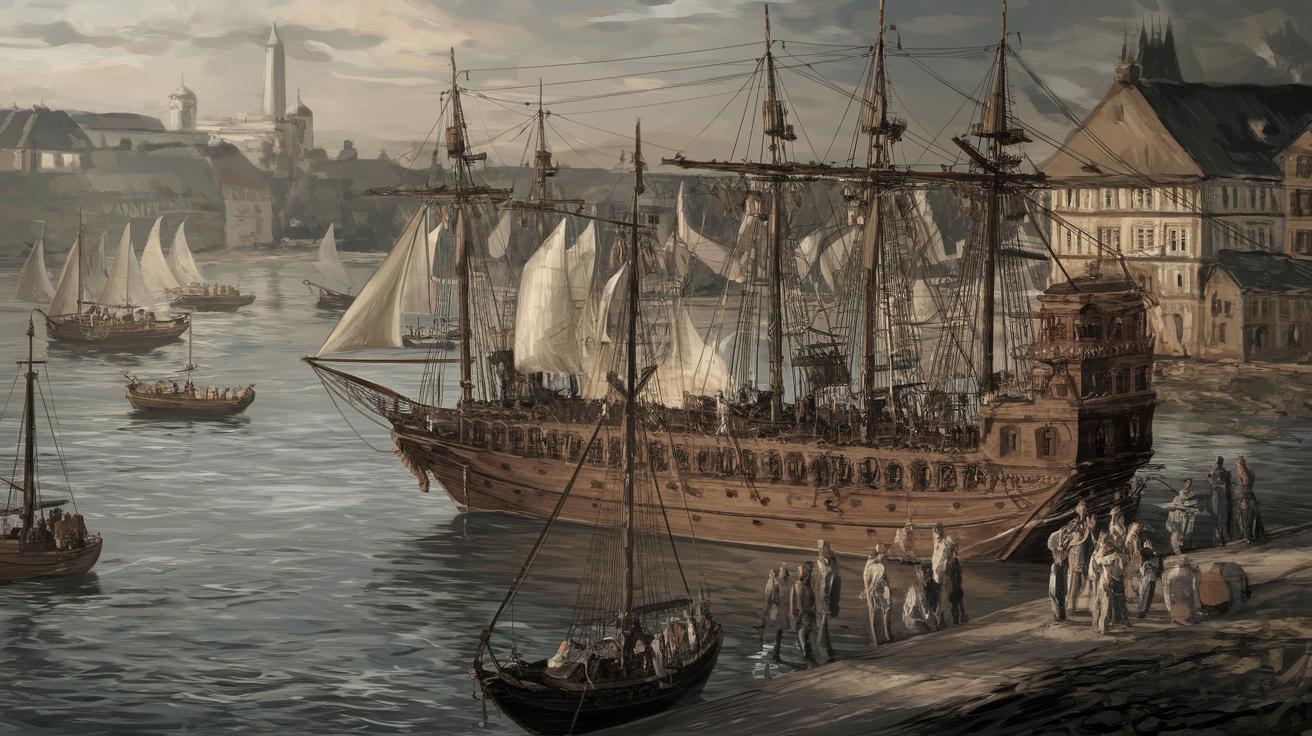
The Silk Road and the Spread of the Black Death
The Silk Road is famed as a network of trade routes that interconnected diverse civilizations across Asia, the Middle East, Africa, and Europe. Over centuries, it facilitated the exchange of not only exquisite goods but also ideas, culture, and even disease. In this exploration, we delve into the main trade route that inadvertently led to the spread of the Black Death during the 14th century. By examining the origins and extent of the Silk Road, the goods and ideas exchanged, and its legacy today, we gain insights into how interconnected trade networks can shape global events and their lasting impacts. Read on to learn more about how this ancient route contributed to one of the deadliest pandemics in human history.
What was the Silk Road?
The Silk Road was not a single road but rather a vast network of interconnected trade routes that for centuries connected the East and West. Established during the Han Dynasty of China around the 2nd century BC, its influence grew over time, molding it into a symbol of economic and cultural bridges between diverse peoples. Named after the lucrative silk trade from China, it was crucial for afar trade with India, Persia, and through to the Mediterranean nations.
While silk was the main trade item from the East, the Silk Road facilitated the exchange of many other goods, cultures, ideologies, and technologies. Merchants, pilgrims, monks, soldiers, nomads, and urban dwellers traversed this network, ushering in an era of interaction that shaped civilizations. Despite its mysterious allure, The Silk Road held challenges—deserts, mountains, bandits, and vast stretches of inhospitable lands.
Where did the Silk Road start and end?
Geographically, the Silk Road extended from the heart of ancient China, traditionally starting in Xi’an, winding its way through Central Asia, the Middle East, and finally reaching the Mediterranean regions. Its primary routes diverged and converged through present-day countries such as Iran, Iraq, and Turkey, extending to Italy and beyond into Europe.
The Silk Road was divided into different routes: the northern and southern routes. The northern route traversed through the area around the Taklamakan Desert and into Central Asia, while the southern route passed through the Karakoram Mountains and ancient Afghanistan into Persia. Each path carried its own challenges and benefits, but collectively, they formed a network capable of weaving together far-off civilizations.
What major goods traveled along the Silk Road?
While silk was the iconic export, the Silk Road was a conduit for numerous luxury items and everyday goods. China exported items such as tea, spices, porcelain, and paper, while other regions contributed precious metals, stones, and textiles. From the West, wool, glassware, and horses were some of the sought-after imports into Asia.
The diversity of goods indicated not only the economic demand but also the cultural exchanges that were pivotal. The interchange of artistic influences, musical instruments, and culinary inspirations fetched fresh ideas and innovations along with every merchant caravan that trudged these routes. The Silk Road was as much about culture and knowledge as it was about economics.
What traveled along the Silk Road besides goods?
Beyond tangible merchandise, the Silk Road was instrumental in spreading ideas, philosophies, religious beliefs, technologies, and unfortunately, diseases. Buddhism, Christianity, and Islam were able to spread their doctrines along the routes, as missionaries traveled with traders. Scientific knowledge, such as medical and astronomical studies, also moved along these pathways, influencing local practices.
However, one of the less fortunate exchanges was the transmission of diseases, with the bubonic plague—or Black Death—being a devastating example. Historians speculate that the plague spread from Asia into Europe along the Silk Road, significantly contributing to the massive outbreak that decimated populations in the 14th century. The Silk Road’s role as a conduit for exchange demonstrated both the boon and bane of interconnectedness.
Is the Silk Road still used today?
While the original Silk Road network in its historic form does not exist in the same manner today, its legacy persists. Modern initiatives like China’s Belt and Road Initiative seek to rekindle these ancient trade routes, using them as avenues for increased economic cooperation and global trade. These contemporary networks of railways, highways, and maritime routes echo the cultural and economic exchanges of their predecessors, reinforcing the global importance of trade.
The Silk Road’s spirit of exchange, innovation, and connectivity continues to inspire global trade and cultural collaboration. Today, digital Silk Roads—cyberspaces of connectedness via the internet and technology—further amplify its original essence. Although the formats may have transformed, the foundational principles of cultural and economic connectivity remain as influential as ever.
Lessons Learned
| Aspect | Details |
|---|---|
| Origins and Extent | The Silk Road started in China, expanded to the Middle East, and reached Europe. |
| Goods | Sought-after items included silk, spices, and precious stones; exchanged for wool and glassware. |
| Cultural Exchange | Facilitated the spread of religions, ideas, and technologies. |
| Disease Spread | Contributed to the spread of the Black Death along its routes. |
| Modern Day | Today’s global trade routes and digital networks mirror the legacy of connectivity. |